
Salt water drips from your nose while you stand shivering on the sand, wondering if the white paste on your cheeks makes you look more like a mime or a ghost.
Protecting your skin shouldn't mean poisoning the very ocean you came to enjoy. Finding the best sunscreens reef safe for your next coastal trip takes a bit of planning because not all mineral formulas are created equal.
Let's walk through five top contenders that keep your skin safe without harming fragile marine ecosystems.
Key Takeaways
- Prioritize non-nano zinc oxide as the active ingredient because mineral particles larger than 100 nanometers cannot be ingested by coral polyps.
- Check labels for Hawaiian law compliance to ensure the formula excludes oxybenzone and octinoxate entirely.
- Select water resistance ratings of at least 40 to 80 minutes if you plan on swimming or surfing actively.
- Look for biodegradable packaging and formulas if you want to minimize your overall footprint on the shoreline.
- Consider clear mineral options if you dislike the heavy white cast typically left behind by traditional zinc lotions.
| Ultimate Eco Choice |  |
Coral Safe SPF 30 Lotion | Biodegradable mineral formula | Convenient TSA compliant size | Gentle SPF 30 protection | View on Amazon | Read Review |
| Jellyfish Sting Defense |  |
Safe Sea Zinc Oxide SPF30 | Dries completely clear | Blocks jellyfish stings | Safe for coral reefs | View on Amazon | Read Review |
| Heavy Duty Shield |  |
Thrive Natural Care SPF50 Mineral Sunscreen | Hawaii reef compliant | Large generous size | High SPF 50 rating | View on Amazon | Read Review |
| Simple Organic Protection |  |
Badger Mineral Sunscreen SPF 50 | High SPF 50 defense | Minimal simple ingredients | Compact tube size | View on Amazon | Read Review |
| Compact Facial Armor | 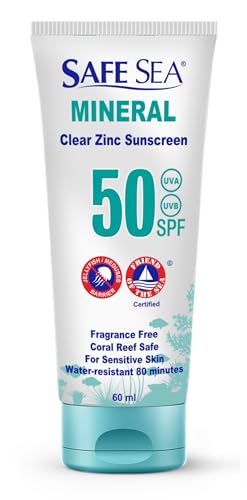 |
Safe Sea Face Sunscreen SPF50 | High SPF 50 protection | Dries clear on skin | Built-in sting deterrent | View on Amazon | Read Review |
More Details on Our Top Picks
-
Coral Safe SPF 30 Lotion
Choosing the right protection for your skin and the ocean can feel like balancing on a tightrope, but Coral Safe SPF 30 Lotion makes the decision simple. This formula relies on biodegradable zinc to block UV rays without leaving harmful chemical residues in delicate marine ecosystems.
You will appreciate the convenient size if you travel frequently, because the tube is completely TSA compliant for carry-on luggage. Packing light just got easier.
The one drawback is that basic mineral formulas often require a bit of extra rubbing to disappear entirely into the skin. Take your time during application, and you will achieve a smooth finish without the ghostly white mask.
- Brand:Coral Safe
- Type:Lotion
- SPF Rating:SPF 30
- Key Ingredient:Zinc
- Special Feature:Biodegradable
- Additional Feature:Mineral based sun protection
- Additional Feature:Safe for marine life
- Additional Feature:Travel friendly packaging
-
Safe Sea Zinc Oxide SPF30
Water sports enthusiasts often face more than just sunburns, which is why Safe Sea SPF30 offers a clever dual-action defense. Beyond blocking UV rays with clear mineral zinc, this specialized lotion helps prevent jellyfish stings during ocean adventures.
Applying this formula is straightforward since it dries clear on both the face and body without the dreaded chalky residue. Surfers and swimmers will find this feature particularly appealing during long days in the waves.
Keep in mind that the 3.4 ounce size runs out quickly if you have a large family using it daily. Plan on grabbing an extra tube if you have a full week of beach outings ahead.
- Brand:Safe Sea
- Type:Lotion
- SPF Rating:SPF 30
- Size:3.4 ounces
- Key Ingredient:Zinc Oxide
- Special Feature:Anti-jellyfish sting protective
- Additional Feature:Mineral sunscreen protection
- Additional Feature:Dual purpose formula
- Additional Feature:Convenient travel size
-
Thrive Natural Care SPF50 Mineral Sunscreen
Hawaii sun protection laws demand strict adherence, and Thrive Natural Care SPF50 meets those rigorous standards with room to spare. This Hawaii 104 compliant option uses non-nano zinc oxide to shield your skin while respecting fragile coral populations.
The generous 5.8 ounce capacity makes this tube a smart pick for extended vacations or multi-person households. You will not have to worry about running out halfway through the week.
One minor hurdle is that the thicker mineral consistency demands a bit of muscle to blend thoroughly. Spend an extra minute massaging the cream into your skin for complete coverage.
- Brand:Thrive Natural Care
- Type:Mineral Sunscreen
- SPF Rating:SPF 50
- Size:5.8 ounces
- Key Ingredient:Non-nano zinc oxide
- Special Feature:Vegan formula
- Additional Feature:Complies with local laws
- Additional Feature:Plant based ingredients
- Additional Feature:Broad spectrum defense
-
Badger Mineral Sunscreen SPF 50
Minimalist ingredient lists are hard to find, but Badger Mineral Sunscreen SPF 50 keeps things refreshingly straightforward. Zinc oxide provides the primary defense, ensuring you get robust UV protection without unnecessary chemical additives.
The compact 2.9 fluid ounce tube slips easily into a pocket or backpack side pouch. Outdoor hikers and runners will appreciate how little space it occupies on the trail.
Be prepared for a whitish mineral cast upon initial application because this formula lacks chemical whitening agents. A thorough massage helps the lotion settle into your skin nicely.
- Brand:Badger
- Type:Mineral Sunscreen
- SPF Rating:SPF 50
- Size:2.9 fluid ounces
- Key Ingredient:Zinc Oxide
- Special Feature:Reef safe
- Additional Feature:Broad spectrum coverage
- Additional Feature:Water resistant formula
- Additional Feature:Biodegradable ingredients
-
Safe Sea Face Sunscreen SPF50
Facial skin requires specialized care, and Safe Sea Face Sunscreen SPF50 delivers targeted protection for delicate areas. The clear mineral formula prevents breakouts while guarding against both sunburns and aquatic irritants.
Packing for a weekend getaway becomes effortless thanks to the compact 2 ounce travel size. It fits neatly into any dop kit or small purse without adding bulk.
The smaller volume means this tube is strictly meant for facial application rather than full-body coverage. Save your larger lotions for the limbs and reserve this concentrated cream for your face and neck.
- Brand:Safe Sea
- Type:Mineral Face Sunscreen
- SPF Rating:SPF 50
- Size:2 ounces
- Key Ingredient:Zinc Oxide
- Special Feature:Anti-jellyfish sting protective
- Additional Feature:Travel friendly tube
- Additional Feature:Coral reef safe
- Additional Feature:Clear facial application
Frequently Asked Questions
What actually makes a sunscreen reef safe?
A sunscreen is considered reef safe when it relies exclusively on mineral blockers like zinc oxide and titanium dioxide. It must completely omit harmful chemicals such as oxybenzone, octinoxate, and parabens. These restricted chemicals damage coral DNA and accelerate bleaching events. Sticking strictly to mineral formulas keeps the ocean ecosystem thriving while you enjoy the waves.
Does mineral sunscreen leave a white cast on the skin?
Older mineral formulations were notorious for giving swimmers a ghost-like appearance. Modern brands use micronized minerals or tint the lotion to blend smoothly across various skin tones. Rubbing the product between your palms before application helps it absorb faster. You can also find tinted versions that match your natural complexion rather than leaving a chalky residue.
How often should I reapply my sunscreen at the beach?
You need to reapply your sunscreen at least every two hours for continuous protection. If you are swimming or sweating heavily, shorten that window to match the water resistance rating on your bottle, usually 40 or 80 minutes. Skipping this step leaves your skin vulnerable to burns, even if the morning application was thorough. Set a timer on your phone so you never forget.
Are spray sunscreens considered safe for reefs?
Spray sunscreens are generally discouraged because much of the product ends up on the sand instead of your skin. Wind carries the microscopic mineral particles away from your body and directly onto the beach, where they can wash into the ocean anyway. Lotions and balms give you precise application control with minimal waste. Sticking to creams ensures the active ingredients actually protect you instead of the surrounding environment.
Can I use my regular daily facial sunscreen for swimming?
You can use your daily facial sunscreen as long as it features mineral active ingredients and proper water resistance. Many daily moisturizers wash away instantly upon contact with water, leaving your face completely unprotected. Check the ingredient panel for zinc oxide and verify the water resistance rating before heading out for a surf session. A dedicated outdoor formula is usually the safer bet for intense sun exposure.