
How do you pick a mineral lotion that will not turn your baby into a chalky ghost while actually blocking the rays?
Protecting tender skin requires a delicate balance of safe ingredients and real-world durability. Choosing among the best natural baby sunscreens means looking past clever marketing to find reliable mineral filters.
Let us compare three popular choices so you can make an informed decision for your little one.
Key Takeaways
- Look for zinc oxide as the primary active ingredient because it sits on top of the skin to reflect ultraviolet rays rather than absorbing them.
- Check the water resistance rating to ensure the lotion stays put during splashing and sweating at the pool or park.
- Prioritize fragrance-free formulas to minimize the risk of rashes and irritation on sensitive baby skin.
- Consider the dispenser type, such as a roll-on or squeeze tube, based on how squirmy your child gets during application.
- Verify that the product meets reef safety standards if you plan on swimming in protected natural waters.
| Sensitive Skin Essential |  |
Aveeno Baby Mineral Zinc Oxide SPF 50 | 100% zinc oxide active ingredient | Tear-free and hypoallergenic formula | Great for eczema-prone skin | View on Amazon | Read Review |
| Easiest Application |  |
Sun Bum Baby Bum Mineral SPF 50 Roll-On | Convenient roll-on stick format | Vegan and reef friendly | Smooth gliding application | View on Amazon | Read Review |
| Ultimate Outdoor Protection | 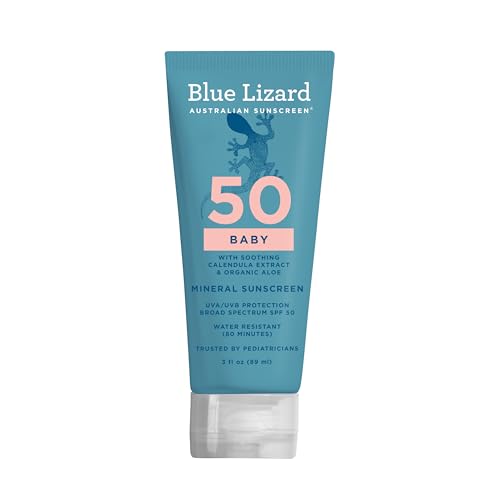 |
Blue Lizard Baby Mineral Sunscreen SPF 50+ | Color changing smart cap | Very high SPF 50+ rating | Fragrance-free mineral formula | View on Amazon | Read Review |
More Details on Our Top Picks
-
Aveeno Baby Mineral Zinc Oxide SPF 50
Finding a sunscreen that does not turn your little one into a red, irritated mess is tough. Aveeno Baby Continuous Protection relies entirely on zinc oxide to shield delicate skin from harsh rays. It forms a physical barrier that sits on top of the skin rather than absorbing into the bloodstream.
Parents dealing with eczema or severe sensitivities will appreciate the tear-free and fragrance-free formula. You get strong broad-spectrum coverage without the chemical filters that often cause flare-ups.
The main drawback is the texture. Because it relies heavily on mineral blockers, you can expect a thick white cast that requires some serious elbow grease to rub in completely.
- Brand:Aveeno Baby
- Type:Mineral sunscreen lotion
- Size:3 Fl Oz
- Active Ingredient:Zinc Oxide
- Water Resistance:Sweat and water resistant
- Special Feature:No added parabens
- Additional Feature:Broad spectrum SPF 50
- Additional Feature:Pediatrician recommended brand
- Additional Feature:Hypoallergenic and gentle
-
Sun Bum Baby Bum Mineral SPF 50 Roll-On
Wrestling a squirming toddler while trying to apply lotion is an Olympic sport. Sun Bum Baby Bum Roll-On changes the game by using a mess-free applicator that glides smoothly over wiggly limbs. You avoid getting greasy product all over your own hands before the beach trip even begins.
This formula meets Hawaii 104 act compliance standards by leaving out octinoxate and oxybenzone. It is completely vegan and packed with moisturizing botanical ingredients to keep baby skin hydrated.
Keep in mind that the smaller 3-ounce size runs out quickly if you have multiple kids to cover all summer long.
- Brand:Sun Bum
- Type:Mineral roll-on stick
- Size:3 oz
- Active Ingredient:Zinc Oxide
- Special Feature:Hawaii 104 Act compliant
- Additional Feature:Broad spectrum UVA and UVB
- Additional Feature:Moisturizing formula for infants
- Additional Feature:Travel friendly size
-
Blue Lizard Baby Mineral Sunscreen SPF 50+
Sun safety requires knowing when UV rays are actually reaching dangerous levels. Blue Lizard Baby Mineral Sunscreen features a clever cap that changes color in ultraviolet light, turning blue to warn you when it is time to reapply. It is a fantastic visual reminder for busy caregivers.
Formulated without parabens or fragrances, this cream offers heavy-duty protection with an impressive SPF 50+ rating. It guards against both UVA and UVB rays while remaining gentle enough for daily use on infants.
The bottle is noticeably heavy and bulky to carry around in a diaper bag.
- Brand:Blue Lizard
- Type:Mineral sunscreen
- Size:3 Ounce Tube
- Active Ingredient:Zinc Oxide
- Water Resistance:Water resistant
- Special Feature:Smart Cap Technology
- Additional Feature:Broad spectrum UVA and UVB protection
- Additional Feature:Chemical-free sun protection
- Additional Feature:Paraben free
Frequently Asked Questions
Can I use regular adult sunscreen on my baby?
You should avoid using standard adult chemical sunscreens on infants under six months old because their skin absorbs ingredients much more readily. Adult formulas often contain fragrances and chemical filters that can cause severe rashes and irritation. Stick to mineral formulas with zinc oxide designed specifically for sensitive pediatric skin whenever possible. If you are in a pinch and have no alternative, any sun protection is better than none, but switch to a gentle mineral option as soon as you can.
At what age can I start putting sunscreen on my baby?
Pediatricians recommend keeping babies under six months old entirely out of direct sunlight and using shade, hats, and lightweight clothing instead of sunscreen. Their skin is extremely thin and immature, making it harder for them to process the ingredients in topical products. Once your baby crosses the six month threshold, you can freely apply a broad spectrum mineral sunscreen to exposed areas like the face and backs of the hands. Prevention is always your best tool, so rely on umbrellas and stroller canopies for the youngest infants.
How do I remove mineral sunscreen at the end of the day?
Mineral sunscreens are designed to sit on top of the skin and resist water, which means they can stubbornly cling to tiny pores during bath time. Use a gentle, fragrance free baby wash along with a soft washcloth to thoroughly cleanse the skin. A dab of baby oil or coconut oil can also help dissolve the mineral residue before washing if the lotion is particularly stubborn. Make sure to rinse thoroughly so leftover product does not trap heat or cause irritation overnight.
Does natural baby sunscreen expire?
Yes, sunscreen loses its effectiveness over time as the active ingredients degrade and break down chemically. Always check the expiration date stamped on the crimp of the tube or the bottom of the bottle. Most sunscreens are formulated to retain their original strength for three years, but heat exposure can shorten that lifespan. If your bottle has been sitting in a hot beach bag all summer, you might want to replace it before next season.
How often do I need to reapply the sunscreen?
You need to reapply mineral sunscreen at least every two hours to maintain adequate protection against UV rays. If your baby has been swimming or sweating heavily, you should reapply immediately after towel drying, even if the product claims to be water resistant. Setting a phone alarm can help you remember this crucial step during long days outdoors. Consistent reapplication is the only way to ensure your sun protection shield remains effective throughout the afternoon.